Monday, 20 February 2017

Yamaha XS-1 (1969) Specification, Wikipedia, On road Price

                                   Yamaha XS-1


Yamaha XS-1 (1969) Price, Specs, Review, Top speed, Wikipedia, Color


                                            The XS-1 s styling and engine layout clearly owed much to British parallel twins. The Yamaha's high bars, small gas tank and torquey 654cc engine made it a hit, especially in America. This model was quickly followed by the XS-2 and then the XS650. All were very similar, and the Yamaha twin changed little in more than a decade.

Yamaha XS-1 HD Images

                                         The look, the layout and the performance of the 650cc XS-1 that Yamaha launched on the American market in 1969 were all familiar to riders who had grown up with British parallel twins. But this bike had one big difference, as the name and the tuning fork logo on its fuel tank made clear. The XS-1 was built by Yamaha of Japan. The last area of Britain’s two-wheeled domination was about to be lost.

Yamaha XS-1 HD Wallpaper

                                       By 1969, Yamaha was already establishing a reputation for high performance, through its smaller two-strokes, on road and track. Factory racing star Phil Read had won both 250 and 125cc world championships in the previous season. But until the XS-1, Yamaha had never built a four-stroke roadster - let alone a 650cc parallel twin that was so obviously aimed at the British opposition.

Yamaha XS-1 HD Photos

                                           And which scored a direct hit, too. For although many riders questioned the wisdom of taking on the likes of Triumph’s Bonneville and BSA’s Lightning with such a similar bike, those doubts were rapidly blown away. 

                                             The XS-1 - and particularly its descendants the XS-2 and XS650, for the original model was promptly updated - soon became strong sellers in the important American market, firmly establishing Yamaha as a manufacturer of large- capacity bikes.

Yamaha XS-1 Exhaust Sound

                                          The 654cc XS-1 engine followed the British opposition in its use of a 360-degree crankshaft, and even its 75 x 74mm bore and stroke dimensions were identical to those of the Lightning. But the Japanese bike also had plenty of mechanical differences, notably its use of horizontally split crankcases. Instead of pushrods, its valves were operated by a single overhead camshaft, driven by a central chain. Peak output was a competitive 53bhp at 7000rpm.

                                         The motor lived in a typical twin-downtube steel frame, which held front forks whose rubber gaiters concealed external springs. Brakes were drums at both ends, with a powerful twin-leading- shoe unit up front. Designed mainly for the American market, the XS-l looked lean and sporty despite high, wide bars - and despite the fact that it was heavier, at 429lb (I95kg) with half a tank of fuel, than a genuine Bonneville.

Pulling power

                                           That weight and the engine’s fairly soft state of tune did not prevent the twin from having lively acceleration. It pulled cleanly from below 2000rpm in top gear, had plenty of mid-range punch, and was good for a top speed of I05mph (I69km/h). Although the engine vibrated in typical parallel twin fashion at around 4000rpm, it smoothed as it approached the 7500rpm redline. And the twin was strong enough to be revved hard, even when tuned for flat-track racing.

Yamaha XS-1 Front look

                                          The Yamaha’s chassis was less impressive. The frame and swingarm lacked rigidity, and combined with the under-damped suspension to result in a frequent weave at high speed, and a choppy ride on bumpy roads. The Japanese bike was fine at a gentle pace, and had to be ridden really hard before it began to misbehave seriously. But its handling, unlike its engine, was no match for the better developed British opposition.

                                     Cycle World was impressed, nevertheless, reporting that the XS-l ‘supplied all the ingredients required to please the Big Twin fancier in an up-to- date, beautifully styled package. It looks good, rides good, stays clean and shows few of the faults one would expect in a first-year model.’ Those assets plus the Yamaha’s reliability and competitive price helped make it a hit in the States. Although it had its faults, the XS-l was a fine first attempt that paved the way for its XS-2 and XS650 successors to establish themselves as some of the best-selling bikes of the 1970s.

Yamaha XS-1 Tail Look

                                                       Yamaha s 654cc parallel nvin owed much to British designs, but differed in its use of a chain-driven overhead camshaft and horizontally split crankcases.

                                                As well as becommmg one of America's best­selling bikes of the 7970s the XS650 continued inti the following decade with models such as this Heritage Classic.

                                            Among the XS-l’s attractions were typically efficient Japanese instruments and electrics. The large steering damper knob hinted at the bike's tendency to weave at speed.

                                    American market, the XS-l looked lean and sporty despite high, wide bars - and despite the fact that it was heavier, at 429lb (I95kg) with half a tank of fuel, than a genuine Bonneville.

Yamaha XS-1 Wikipedia

Pulling power

                                         That weight and the engine’s fairly soft state of tune did not prevent the twin from having lively acceleration. It pulled cleanly from below 2000rpm in top gear, had plenty of mid-range punch, and was good for a top speed of I05mph (I69km/h). Although the engine vibrated in typical parallel twin fashion at around 4000rpm, it smoothed as it approached the 7500rpm redline. And the twin was strong enough to be revved hard, even when tuned for flat-track racing.

                                               The Yamaha’s chassis was less impressive. The frame and swingarm lacked rigidity, and combined with the under-damped suspension to result in a frequent weave at high speed, and a choppy ride on bumpy roads. The Japanese bike was fine at a gentle pace, and had to be ridden really hard before it began to misbehave seriously. But its handling, unlike its engine, was no match for the better developed British opposition.

Yamaha XS-1 Specification

                                        Cycle World was impressed, nevertheless, reporting that the XS-l ‘supplied all the ingredients required to please the Big Twin fancier in an up-to- date, beautifully styled package. It looks good, rides good, stays clean and shows few of the faults one would expect in a first-year model.’ Those assets plus the Yamaha’s reliability and competitive price helped make it a hit in the States. Although it had its faults, the XS-l was a fine first attempt that paved the way for its XS-2 and XS650 successors to establish themselves as some of the best-selling bikes of the 1970s.

                                       Yamaha s 654cc parallel nvin owed much to British designs, but differed in its use of a chain-driven overhead camshaft and horizontally split crankcases.

Yamaha XS-1 Review

                                               As well as becommmg one of America's best­selling bikes of the 7970s the XS650 continued inti the following decade with models such as this Heritage Classic.

                                                   Among the XS-l’s attractions were typically efficient Japanese instruments and electrics. The large steering damper knob hinted at the bike's tendency to weave at speed.

                         Specification Yamaha XS-1                                                      (1969)


  • Engine Air-cooled sohc four-valve parallel twin
  • Capacity 654cc (75 x 74mm)
  • Maximum power 53bhp @ 7000rpm
  • Transmission Five-speed, chain final drive
  • Frame Steel twin cradle
  • Suspension Telescopic front; twin shocks rear
  • Brakes Drum front and rear
  • Weight 429lb (195kg)
  • Top speed 105mph (169km/h)

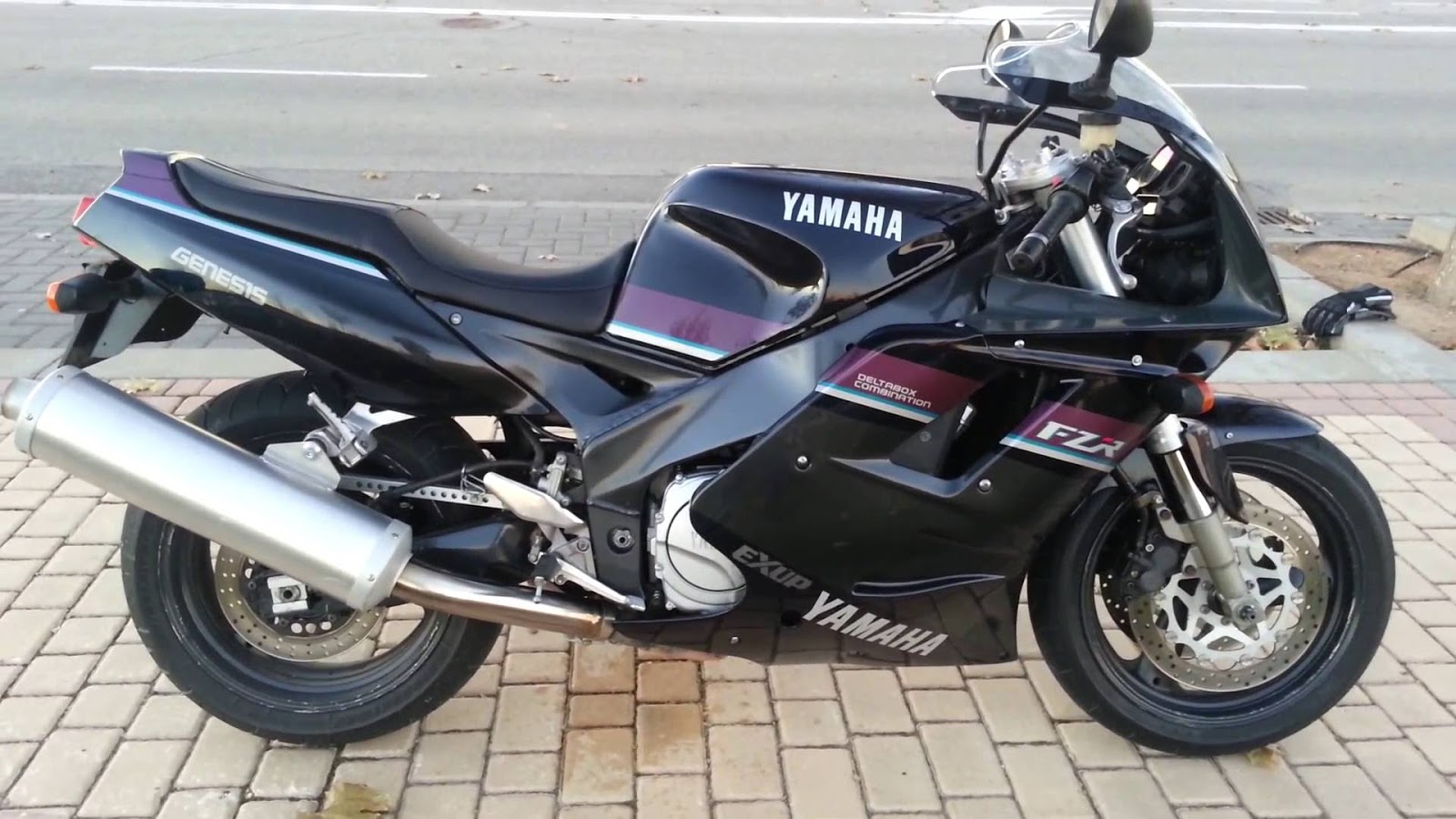
Yamaha FZR1000 (1991) Colors, Specification, Vintage collection

                                      Yamaha FZR1000

Yamaha FZR1000 Price, Specs, Review, Top speed, Wikipedia, Color

                          The FZRIOOO was updated over the years while keeping its angled-forward 20-valve engine and twin- spar aluminium frame. This 1994 FZRIOOO has twin fox-eye ’ headlamps and six-piston front brake calipers from the YZF750 race-replica, plus front forks from Yamaha-owned Swedish specialist Ohlins.

Yamaha FZR1000 HD Images

                          FZR1000R EXUP was in most respects the world's finest production super-sports bike. It had a 1002cc, 20-valve, liquid-cooled engine that produced over 140bhp with heaps of mid-range, housed in a light, taut and superbly neutral-steering chassis. The Yamaha was lightning fast, handled superbly, looked good and was impeccably reliable.

Yamaha FZR1000 HD Wallpaper

                          Perhaps the only thing that the 1991-model FZR1000 lacked was the mean and nasty image that made its main rival, Suzuki’s GSX-R1100, so popular despite inferior power delivery and handling. For despite its top speed of more than 160mph (257km/h) and the ability to cover a quarter mile from a standing start in less than 11 seconds, the FZR was so flexible, easy to ride and generally well behaved that some riders found it lacking in character.

Yamaha FZR1000 HD Photos

                              That was hard on the FZRIOOO. which had been updated to good effect since the model’s debut in 1987. The first FZR was developed from the FZ750. which two years earlier had introduced Yamaha’s 20-valve engine layout with its angled- forward cylinder block. The original FZRIOOO featured a 989cc engine that produced 125bhp, and a rigid twin-spar aluminium ‘Deltabox’ frame, based on that of Yamaha's Genesis factory racer.

Yamaha FZR1000 Exhaust Sound


                               The FZRIOOO was instantly competitive with the fastest and best sports bikes, and got better still in 1989. with a larger 1002cc engine that made 140bhp, and also benefited from an electronically operated exhaust valve whose acronym led to the FZR often being known as the ‘EXUP'. It was partly this valve that gave the Yamaha such storming mid-range acceleration.

Yamaha FZR1000 Front look

                       That 1989-model EXUP. with its round twin headlamps, was a fine machine that was described by one tester as the closest thing yet to a perfect sportster. Yet Yamaha improved on it in 1991 with the FZR1000RU, which featured a new single-lens headlamp plus upside-down forks for the first time. Not everyone was convinced of the need to alter either the old FZR's look or its suspension, but one ride on the new bike was normally enough to change their mind.

Yamaha FZR1000 Tail Look

                                 There was no change to the breathtaking power delivery of the 140bhp motor, whose top-end rush of power was matched by smooth mid-range delivery of the kind for which the FZR had become known. But the new model, which was respectably light at 4611b (209kg). steered with even more precision and could be cornered even faster due to the extra control of its high quality chassis.

Yamaha FZR1000 Wikipedia

                                 The FZR was the fastest, most agile super- sports machine of its day. though its reign was short-lived, because Honda's ultra light and compact FireBlade followed in 1992. Not that development of the FZR 1000 stood still. In 1994 it was uprated again, with twin 'fox-eye' light- in a new fairing, plus six-piston front brake caliper-. The result was even more of the style, speed and all-round high performance for which the FZR 1000 was rightly famous.

Yamaha FZR1000 Specification

Faster Still: the Thunderace

                                When Yamaha uprated the FZR yet again in 1996, the new model incorporated so many changes that it was renamed the YZF1000R Thunderace. Its 1002cc engine produced 145bhp and was stronger than ever in the mid-range. A lighter, more rigid frame from the YZF750, plus new suspension and brakes, gave even better handling and stopping. And bodywork was more streamlined, taking top speed to 170mph (274km/h). The Ace was a wonderfully fast and capable bike, but it was less racy than Honda's FireBlade - and Yamaha knew it. Even as the Thunderace was being launched, development of the more radical YZF-R1 had begun.

Yamaha FZR1000 Review

                            The original FZR1000, introduced in 1987, had two round headlights in its fairing, and a 989cc four-cylinder motor producing 125bhp.

Yamaha FZR1000 Top Speed

                          By 1991 tht Yamaha featured a singlt headlight, and a 1002cc engine boosted by an EX CP exhaust valve.


         Specification Yamaha FZR1000RU                                                (1991)


  • Engine Liquid-cooled dohc 20-valve four
  • Capacity 1002cc (75.5 x 56mm)
  • Maximum power 140bhp @ 10,000rpm
  • Transmission Five-speed, chain final drive
  • Frame Aluminium twin spar
  • Suspension Telescopic front; single shock rear
  • Brakes Twin discs front; disc rear
  • Weight 4611b (209kg)
  • Top speed 165mph (266km/h)

Sunday, 19 February 2017

Yamaha YR5 (1970) Engine specification, Color, Weight

                                  Yamaha YR5


Yamaha YR5 Price, Specs, Review, Top speed, Wikipedia, Color

                                   The YR5’s styling was simple and obviously road-based, in contrast to earlier dual-purpose Yamaha twins. High handlebars did little to dilute the aggressive, rev- happy image of a bike that was closely related to Yamaha’s racers.

Yamaha YR5 HD Pics HD Images

                                            Yamaha’s two-stroke middleweight twins were among the outstanding bikes of the 1970s, providing a combination of performance and value that made them hugely popular. Best known were the RD350 and RD400 models but it was with the earlier YR5 that the legend of Yamaha’s giant-killing 350cc two-stroke screamers began.

Yamaha YR5 HD Wallpaper

                                       The initials RD stood for Race Developed, and that was very much true of the YR5 too. Yamaha had already begun to dominate 250cc grand prix racing when the YR5 was introduced in 1970. In that year Yamaha’s TD2 air-cooled twin-cylinder production racer not only took British rider Ron Gould to the world championship, but it also occupied the first seven places. Much of the same technology was used for the roadsters, which were also produced in 125, 200 and 250cc capacities.

Yamaha YR5 Exhaust Sound

                                 Like its smaller siblings, as well as predecessors dating back to the YR1 of 1967, the 347cc YR5 was based around a piston-ported two- stroke twin with a 180-degree crankshaft arrangement. It breathed in through a pair of 28mm Mikuni carbs, and out through a pair of horizontal chromed pipes. The gearbox was a five-speeder, with a modern change pattern that put neutral between first and second, instead of at the bottom of the box like some rivals. Peak power was 36bhp at 7000rpm.

                                            In contrast to the off-road-influenced styling of its predecessors, which had featured crossbar-style handlebars and high-level exhaust systems, the YR5 was very much a roadster. Although its handlebars were still high, the bike had sleek and simple styling, and was shorter, lower and lighter at 33lib (I50kg). Its frame was a twin-downtube steel structure, reinforced at the steering head and swingarm pivot with the benefit of Yamaha’s grand prix racing experience.

Yamaha YR5 Front look

Noise, smoke and acceleration

                                       That racing heritage was clear on the road, where YR5 riders required little imagination to see themselves in the saddle of a high-revving grand prix racer. The Yamaha two-stroke burbled, rattled and smoked (when cold) like a true two-stroke, albeit a sophisticated and well-behaved one. More importantly it had thrilling acceleration, revved to 8()()0rpm through the gears, cruised smoothly at an indicated 80mph (I29km/h) and reached a top speed of 95mph (I53km/h).

Yamaha YR5 Tail Look

                                        Handling was pretty good, thanks to the rigid frame, light weight and simple but reasonably well- controlled suspension. Cycle World described the YR5 as a quick-handling machine, with ‘little to inhibit the rider from pitching the machine aggressively through his favourite set of bends. Damping seems quite up to par, and the tyres deliver good tracking precision and traction.’ The Yamaha’s front and rear drum brakes were progressive, grab-free and with only a slight tendency to fade under repeated use.

Yamaha YR5 Wikipedia

                                       The YR5’s blend of good looks, reliability, lively performance and competitive price quickly made it popular on both sides of the Atlantic. For the next few years Yamaha’s two-stroke twins would be hugely successful in the showrooms, just as they were on the racetrack. The old adage that 'racing improves the breed' was never more brilliantly proven.

                                             Yamaha produced a string of outstanding sportsters as the two-stroke middleweight was updated throughout the 1970s. A notable jump came in 1973 with the first RD350 model, which featured a reed-valve induction system, six- speed gearbox, powerful disc front brake and, on a good day, a top speed of over 10Omph (161 km/h). The RD400C (below) arrived in 1976 with angular styling, improved handling and extra mid-range performance from its 398cc, 40bhp engine. Similar 250cc versions of both models provided almost as much speed for even less expense.


                         Specification Yamaha YR5                                                        (1970)


  • Engine Air-cooled two-stroke parallel twin
  • Capacity 347cc (64 x 54mm)
  • Maximum power 36bhp @ 7000rpm
  • Transmission Five-speed, chain final drive
  • Frame Steel twin downtube
  • Suspension Telescopic front; twin shocks rear
  • Brakes Drum front and rear
  • Weight 3311b (150kg)
  • Top speed 95mph (153km/h)

Thursday, 16 February 2017

Yamaha XS750 (1977) Wikipedia, Price, Top speed

                          Yamaha XS750

   Yamaha XS750 Price, Specs, Review, Top speed, Wikipedia, Color


                            The Yamaha handled well despite being a fairly heavy bike with shaft final drive.

                                 The original XS750’s rounded styling, silver paintwork and black- finished three-cylinder engine gave a distinctive look from the front.

                                  Few bikes have arrived to such a warm welcome as Yamaha’s first big four-stroke superbike, the XS750 triple, whose performance, distinctive style and versatility made it highly rated by press and public alike on its launch in 1977. And fewer still have followed that initial impact by fading from the scene quite so quickly, having failed to make a mark on a superbike market that was suddenly awash with high-quality alternatives.

                                   On paper, the Yamaha looked a winner to its last, carefully considered detail. The basics were very much in place. Its engine was a 747cc air­cooled triple with twin overhead camshafts, a 120- degree crankshaft (for smooth running) and shaft final drive. Yamaha’s designers had kept the engine compact by using bevel gears to turn the crankshaft’s drive through 90 degrees for the drive shaft. With a maximum output of 64bhp at 7200rpm and plenty of mid-range torque, the triple came very close to matching its sportier chain- driven four-cylinder rivals for pure power.

                               This unique engine was matched to rounded, distinctive styling and a relatively conventional but cleverly designed chassis. The twin-downtube steel frame employed substantial bracing around the steering head, in the fashion of the BMW’s R75 twin. Forks and twin rear shocks were typical Japanese items. The Yamaha was rather tall and it was heavy at 5141b (233kg) dry. But it was also well appointed, with a roomy riding position, clear instruments and self-cancelling indicators.

                                  Straight-line performance was undeniably impressive. The Yamaha’s motor was smooth, tractable and powerful, sending the bike to a top speed of 120mph (193km/h) and allowing effortless high-speed cruising. Its three-cylinder layout gave a pleasant character, with the bonus of a distinctive exhaust note. And the XS had an efficient five- speed gearbox as well as its shaft final drive system, itself a real benefit in the days of fast- wearing drive chains.

                                  That drive shaft had almost no adverse effect on the Yamaha’s handling, which received much praise although the bike was designed for comfort as much as for agility. ‘We failed to make it waggle, weave or twitch and we tried our damnedest,’ enthused Bike magazine’s experienced tester, who summed up the XS750 as the best Japanese bike and best all-round touring machine he’d ever ridden - including numerous more expensive BMWs.

Comfortable cruising

 Yamaha XS750 HD Pics HD Images HD Wallpaper HD Photos

                                 Long-distance comfort was good by the standards of unfaired bikes, thanks partly to the generously padded dual-seat. One criticism was that the fuel tank was too small for touring, but this and the poor headlamp were the only criticisms, apart from the mediocre wet-weather performance of both tyres and disc brakes, which was typical at the time. Given the Yamaha’s very competitive price, it looked set to become a big hit.

                                      But the motorcycling public decreed otherwise, partly because of the rival attraction of fours including Honda’s proven CB750, Suzuki’s new GS750 and Kawasaki's cheaper Z650; and partly because the Yamaha quickly earned a reputation for unreliability. Troubles included piston ring failure, seizure of the central cylinder, rapidly wearing primary drive chain and ignition points, plus the gearbox’s occasional trick of jumping from fourth straight into first.

                                Word of the unreliability spread, and the XS750 never recovered. Yamaha made a series of updates to cure the problems, and in 1978 improved the triple with the XS750E model, which had an extra 4bhp, revised lubrication system and uprated front suspension. But the damage had been done, and neither that model nor the revamped XS850 that followed two years later could bring Yamaha’s triple the success that had once seemed so assured.

 Yamaha XS750 Exhaust Sound

                                           Chassis layout was typical of the mid-1970s, with twin-downtube steel frame, non-adjustahle telescopic forks and twinrear shocks. Compliant suspension and the broad dual seat helped make the Yamaha a useful long­distance machine, despite its small fuel tank.

                          Yamaha’s 747cc twin- cam triple initially impressed all who rode the bike with its 64bhp output, smoothness, abundance of mid-range torque, and unobtrusive shaft final drive system. But the Japanese firm's insufficient development testing of its first big four-stroke engine became clear from the XS750's inherent mechanical problems.

                      Specification Yamaha XS750                                                    (1977)


  • Engine Air-cooled dohc six-valve transverse triple
  • Capacity 747cc (68 x 68.6mm)
  • Maximum power 64bhp @ 7200rpm
  • Transmission Five-speed, shaft final drive
  • Frame Steel twin downtube
  • Suspension Telescopic front; twin shocks rear
  • Brakes Disc front and rear
  • Weight 5141b (233kg)
  • Top speed 120mph (193km/h)

Tuesday, 14 February 2017

Yamaha RD350LC (1981) Price, Colors, Specification

                           Yamaha RD350LC


Yamaha RD350LC Price, Specs, Review, Top speed, Wikipedia, Color


                            High handlebars and neat, fairly rounded styling barely hinted at the high-revving excitement and giant-humbling ability of the bike that would soon become a cult machine in many countries. The cantilever monoshock suspension system, derived like so much else from Yamaha’s racing experience, contributed to the LC ’v lean look as well as to its excellent handling.

Yamaha RD350LC HD Pics

                                 It might have produced less than 5()bhp and had a top speed of not much more ' than 1 OOmph (161 km/h), but for many riders Yamaha's brilliantly raw, racy RD350LC was the high-performance bike of the 1980s - or any other decade, come to that. Certainly, few machines can have brought so much fast and furious enjoyment to so many people, so cheaply, as the liquid-cooled two-stroke twin that Yamaha unleashed in 1981.

Yamaha RD350LC HD Images

                                   The LC’s pedigree was impeccable, as it was a descendant of the string of outstanding air-cooled strokcrs with which Yamaha had established an unmatched reputation for middleweight performance. Models such as the YR5, RD350 and RD400 had kept the tuning-fork logo to the fore through the 1970s, while on the racetrack Yamaha’s all-conquering air-cooled twins had been superseded by the liquid-cooled TZ250 and 350, with equally spectacular results.

Yamaha RD350LC HD Wallpaper

                                    For all the Race Developed nature of this latest in the RD series, the LC's 347ec engine owed more to that of the RD400 roadster than to the TZ350 racer. The water jacket maintained a constant temperature and allowed the engine to be in a higher state of tune without loss of reliability. Liquid cooling also helped make the 47bhp motor cleaner and quieter than its air-cooled predecessor; important for environmental reasons although not enough to satisfy US emissions regulations.

Yamaha RD350LC HD Photos

Race-bred monoshock

Yamaha RD350LC Exhaust Sound

                                    The LC’s other race-developed feature was its cantilever rear suspension system, which featured a single shock unit mounted diagonally under the seat, instead of the RD400’s twin shocks. Chassis layout was otherwise conventional, with a twin- downtube steel frame, non-adjustable front forks, slightly raised handlebars, attractively rounded styling and a twin-disc front brake.

Yamaha RD350LC Front look

                                    One ride was enough to get most speed-happv motorcyclists addicted to the Yamaha’s exuberant performance. Below 6000rpm it was ordinary; starting easily (w ith a kick), idling reliably and feeling docile. Then the motor came to life with a scream through its twin pipes, and a burst of acceleration that was as thrilling as it was sudden. With its rider's chin on the tank the LC w'as good for l lOmph (I77km/h), but it was the fierce way it got there that made this bike so special.

Yamaha RD350LC Tail Look

                                   The Yamaha really handled, too. Its forks were slightly soft, particularly when the powerful front brake was used hard, and the front end could feel decidedly twitchy when the bike w'as accelerating out of a bend. But the frame was strong, the rear suspension worked well and the LC could be flicked around with the ease and precision of a race-bred machine weighing just 331 lb (150kg) with fuel.

Yamaha RD350LC Wikipedia

                                          All in all the RD350LC was a magical motorbike: fast, reliable (at least when standard), agile, reasonably practical, tuneable, raceable. and most of all brilliant fun. Over the years it w as updated several times, notably in 1983 to produce the RD350 YPVS. w'hose exhaust power valve added mid-range power: and three years later with a full fairing to create the RD350F2. All shared the same key assets: irresistible performance and unbeatable value for money.

Yamaha RD350LC Specification

Legalized Chaos: the Pro-Am Series

Yamaha RD350LC Review

                           The LC's speed and fire were brought to a wider Br tish a^o r a spectacular RD350 Pro-Am series. The main attractions v.er- v -• was good; riders were aged under 25 (some professionals hence the title); and the LCs were identical, prepared by v5 after keys were drawn out of a hat. The result was close, aggra a saw the first year's title appropriately won by a rider named A d - brought future grand prix stars including Niall Mackenzie annd Ke prominence. The format spread, and led to an international 350LC sa_ a: was equally hotly contested.


               Specification Yamaha RD350LC                                                  (1981)


  • Engine Liquid-cooled two-stroke parallel twin
  • Capacity 347cc (64 x 54mm)
  • Maximum power 47bhp @ 8500rpm
  • Transmission Six-speed, chain final drive
  • Frame Steel twin downtube
  • Suspension Telescopic front; single shock rear
  • Brakes Twin discs front; drum rear
  • Weight 3111b (141kg)
  • Top speed 110mph (177km/h)


Monday, 13 February 2017

Yamaha RD500LC (1984) Specification, Review, HD Photos

                      Yamaha RD500LC

Yamaha RD500LC Price, Specs, Review, Top speed, Wikipedia, Color


                        The Yamaha engine felt flat below 6000rpni, hut once the two-stroke V4 hit its power band in first gear, the lightweight l.C liked nothing better than to scream off with its front wheel in the air. The race- replica four 's need for high revs resulted in a thrilling ride on the road, and made i >beying speed limits almost impossible.

Yamaha RD500LC HD Pics

                    Few superbikes have been as eagerly anticipated as the RD500LC. In 1983 the C-9IH long-standing success of Yamaha’s middleweight two-stroke twins, combined with the factory's success in 5(X)cc grand prix racing, made a 500cc four-cylinder race replica seem the logical next step. Such was the demand that some magazines went as far as publishing spoof road tests of a machine that did not exist.

Yamaha RD500LC HD Images

                    When Yamaha finally put the real thing into production in the following year, few who rode one were disappointed. The RD500LC looked superb, w ith a racy full fairing in red and white colours similar to those of the factory OW76 that Eddie Lawson was riding to victory in that season’s world championship. Like Lawson’s racer, the 500LC was powered by a liquid-cooled V4 two-stroke engine. The roadster produced 90bhp, weighed an equally impressive 392lb (178kg) dry. and screamed to almost I40mph (225km/h).

Yamaha RD500LC HD Photos

Two-stroke heritage

Yamaha RD500LC Exhaust Sound

                       Rather than being developed directly from the racebike engine, the LC’s 499cc, 50-degree V4 powerplant was essentially two RD250LC units with bottom ends geared together, and with a gear- driven balancer shaft to reduce vibration. Induction system, engine porting and exhaust design were very different to the OW76 racer’s, but bore and stroke dimensions of 56.4 x 50mm were almost identical, and the roadster also shared features including exhaust power valves.

Yamaha RD500LC Front look

                      Apart from the addition of lights and other roadgoing necessities, the main chassis difference between roadster and racer was that the RD500LC’s frame was made from square-section steel tubing instead of aluminium. This was still one dramatically purposeful streetbike though, with high quality chassis parts including anti-dive equipped telescopic forks, plus a single rear shock unit positioned horizontally beneath the engine.

Yamaha RD500LC Tail Look

                      The Yamaha’s look and specification were mouth-watering, and its performance lived up to expectation. In typical two-stroke fashion the V4 felt flat at low revs, then came into its power band at 6000rpm with a crackle of its exhausts and a blast of acceleration that sent the lightweight machine shooting forward at breathtaking rate. That meant that in top gear it came alive only at about lOOmph (I6lkm/h). Fortunately. Yamaha had supplied a good pair of mirrors...

Yamaha RD500LC Wikipedia

                              Even more importantly, the 5()()LC's handling was a match for its motor. As well as light and quick steering, aided by its 16-inch front wheel, it was stable in slower bends and high-speed curves alike. Sometimes the front end got slightly twitch) when the bike hit a bump under acceleration. But that was no real problem, and the Yamaha’s powerful triple-disc brake system was among the best in motorcycling.

Yamaha RD500LC Specification

                             Yamaha had succeeded in creating a bike that felt like a racer on the road, and the RD500LC proved its ability on the track with victor), against many big four-strokes, in Australia's prestigious Castrol Six-Hour production race. In the showrooms it was less successful, despite all the pre-launch hysteria. Draw backs included poor fuel consumption, vibration, mediocre finish and a high price. Perhaps the real problem was that the RD500LC was just a little too much like a real racebike for its own good.

Yamaha RD500LC Review

Yamaha's V4 Revolution

Yamaha RD500LC Stunt Pics

Before building the RD500LC, Yamaha also led the rro500cc grands prix. Triple champion Kenny Roberts debu 2-dec- 1982, and is seen here leading fellow works rider Graeme Crcsc. .vt>: the previous OW60 square-four. The OW61, which had disc-valve - lacked mid-range power and also handled poorly but the 1984-rroOr 2 featuring reed-valve induction and a Deltabox aluminium frame, wa- ‘ -better. Eddie Lawson's world championship victory that season was re * ' ' in nine years for Yamaha's 500cc V4.

Yamaha RD500LC Top Speed

                          In corners few bikes came close to matching the RD500LC, which combined light weigh: with a rigid steel frame. fire: suspension and plenty of grip and ground clearance

Yamaha RD500LC In All Colors

                          With its full fairing seat hump and two-stroke exhaust system, the RD500LC was the closest thing yet to a GP bike on the road.


             Specification Yamaha RD500LC                                                (1984)


  • Engine Liquid-cooled two-stroke 50-degree V4
  • Capacity 499cc (56.4 x 50mm)
  • Maximum power 90bhp @ 8500rpm
  • Transmission Six-speed, chain final drive
  • Frame Steel twin downtube
  • Suspension Telescopic front; single shock rear
  • Brakes Twin discs front; disc rear
  • Weight 392lb (178kg)
  • Top speed 138mph (222km/h)