Sunday, 19 February 2017

Suzuki GT750 1970 Review, Top speed, Color

                                Suzuki GT750


Suzuki GT750 Price, Specs, Review, Top speed, Wikipedia, Color


                               This front view shows the big radiator and broad engine of a bike whose styling did not hide its weight.

Suzuki GT750 HD Pics HD Images HD Photos

                               Pink paintwork, rounded styling and reverse-cone silencers give the GT750 an unmistakable early 1970s appearance. The front drum brake was soon changed to twin discs.

Suzuki GT750 HD Wallpaper

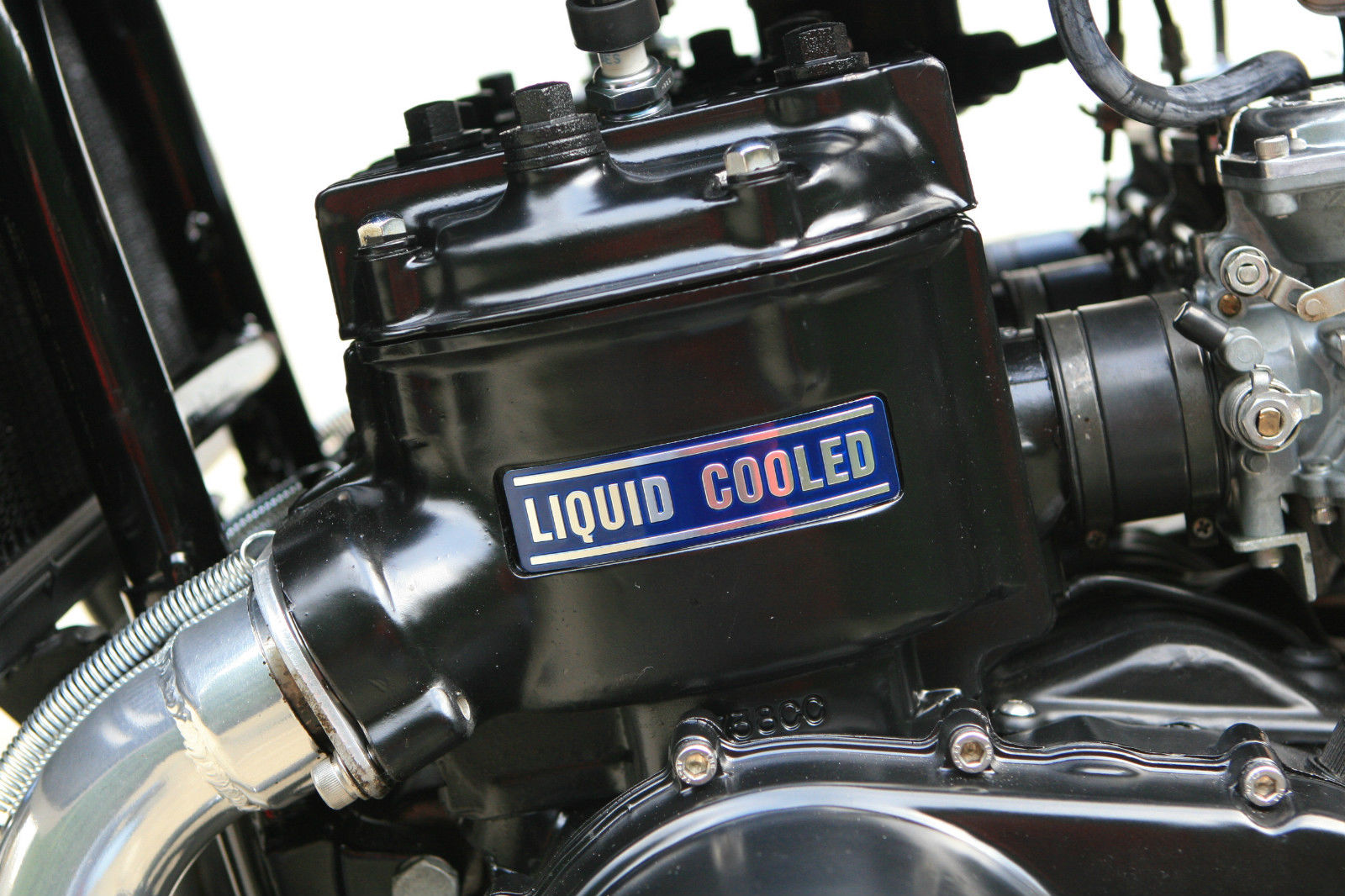
                                       With its bulbous styling, lurid paintwork and distinctive liquid-cooled, two-stroke triple engine, Suzuki’s GT750 was one of the most eye-catching of early superbikes. It was also one of the most successful. Although built for comfort, smoothness and low-rev torque more than for pure performance, it was one of the fastest and most glamorous bikes of its day.

Suzuki GT750 Exhaust Sound

                                          Where the triple known as the ‘Kettle’ in Britain and the ‘Water Buffalo’ in America excelled was in keeping up a high cruising speed for long distances. The GT was a Grand Tourer by name and by nature, with plenty of mid-range torque, a roomy and comfortable riding position and an ability to sit at a steady 80mph (129km/h) or more with a minimum of fuss and stress.

Suzuki GT750 Front look

                                   The GT’s 738cc piston-ported two-stroke engine was essentially one-and-a-half units from the air-cooled T500 twin. Retaining the twin’s 70 x 64 mm cylinder dimensions, but adding an extra cylinder plus liquid cooling, resulted in much improved mid-range response plus a peak power output of 67bhp at 6500rpm.

Suzuki GT750 Specification

                    Suzuki GT750 Specification


  • Engine Two stroke, transverse 3 cylinder,
  • Capacity 738 cc / 45.0 cu in
  • Bore x Stroke 70 х 64 mm
  • Max Power 52.2 kW / 70 hp @ 6500 rpm
  • Max Torque 83 Nm / 8.5 kgf-m 61.5 lb-ft @ 5500 rpm
  • Transmission 5 Speed
  • Top Speed (claimed) 193 km/h / 120 mph


Friday, 17 February 2017

Laverda 750 SFC (1972) Wikipedia, Price, Top speed

                            Laverda 750 SFC


Laverda 750 SFC Price, Specs, Review, Top speed, Wikipedia, Color

                                    One glance at the Laverda 750 SFC was enough to reveal why the Italian twin made an impact out of all proportion to the small number of machines that were produced. The SFC was hugely stylish and racy, with clip-on handlebars, rearset footrests, a half-fairing and single seat. Its bodywork was orange, because that colour made the model easier to spot at night during the 24-hour endurance races for which it was created.


Laverda 750 SFC HD Pics

                                  Unlike most so-called race replicas, the 750 SFC really was a racebike first and a roadster second. It was launched in 1971 as an endurance racing version of Laverda’s SF series of 750cc parallel twins. Despite this, a large proportion of the 549 SFCs built in the following few years were ridden on the street, after fitment of such essentials as speedometer and number plate.

Laverda 750 SFC HD Images

                                          Laverda, the small firm from Breganze in north-eastern Italy, had first produced a 654cc parallel twin in 1967, before enlarging the motor to 744cc a year later. In 1969 the factory had introduced a sportier 750S model, which in turn had been followed by the 750 SF (F standing for freni, Italian for brakes, due to its uprated drums). These models had been campaigned on European endurance race circuits with some success. But the firm’s boss, Massimo Laverda, decided that a purpose-built racer was needed so the SFC was bom, the C of its name standing for Competizione.

Laverda 750 SFC HD Images

                                              Although it shared the SF’s basic engine layout, which meant dimensions of 80 x 74mm, a 360- degree crankshaft and chain drive to the single overhead camshaft, the SFC shared few components. Special parts included high-smsa compression pistons, 36mm Amal carburettors and a close-ratio five-speed gearbox. Engine parts were selected by Laverda’s race shop before being heat- treated to improve strength. Peak output was a claimed 70bhp at 7500rpm, enough for a top speed of I25mph (201km/h).

Laverda 750 SFC HD Photos

                                  Similarly the SFC frame shared the original twin’s layout of a spine made from four steel tubes above the engine, but was modified to take the fairing and rear-set footrests. Initial models featured Ceriani front and rear suspension plus Laverda’s own drum brakes. The combination proved a success, as the SFC won its first race, the Barcelona 24 Hours at Montjuic Park in 1971.

Laverda 750 SFC Exhaust Sound

                                               For the next few years the SFC was one of the fastest bikes on the road, and one of the best handling too. But the high specification ensured that it was expensive, and fewer than 100 were built in each of the first three years. In 1974 Laverda subtly reshaped the bodywork and fitted uprated parts including thicker forks and triple disc brakes. Production numbers increased slightly, and some bikes were built for road use with full instruments and even indicators.

Laverda 750 SFC Front look

                                          Later SFCs featured electronic ignition and some had cast wheels too. The last models were the fastest, especially when fitted with the optional factory camshaft that gave extra power and a top speed of I35mph (2l7km/h). Fittingly, the SFC’s racy look, paint scheme and personality remained very much intact until production ended in 1976.

Laverda 750 SFC Tail Look

                                                 The SFC's 744c air­cooled sohc parallel twin engine looked similar to other Laverda units, but featured specially selected tuning parts. It was also fitted with bigger carbs, a close-ratio gearbox, uprated bearings and a larger capacity oil pump.

One-race Wonder: the Mighty V6

Laverda 750 SFC Wikipedia

                                           Laverda's fastest ever bike was another orange endurance racer: the 996cc V6 that was raced in the Bol d'Or 24 Hours in France in 1978. The 90- degree V6 unit featured 24 valves, liquid cooling and shaft final drive, and produced 139bhp at 10,500rpm. Although very heavy at 520lb (236kg), the V6 was stunningly fast, and was timed at 176mph (283km/h) before its drive shaft failed after eight hours. Laverda's financial problems meant that it did not race again, and a roadgoing version was never produced.


                 Specification Laverda 750 SFC                                                    (1972)


  • Engine Air-cooled sohc four-valve parallel twin
  • Capacity 744cc (80 x 74mm)
  • Maximum power 70bhp @ 7500rpm
  • Transmission Five-speed, chain final drive
  • Frame Tubular steel spine
  • Suspension Telescopic front; twin shocks rear
  • Brakes Drum front and rear
  • Weight 454lb (206kg)
  • Top speed 125mph (201 km/h)

Laverda Jota (1976) Top speed, Maximum power, Transmission type

                               Laverda Jota


Laverda Jota  (1976) Price, Specs, Review, Top speed, Wikipedia, Color

                               The Jota’s great asset was engine performance rather than handling, hut the big Laverda cornered well enough to keep it ahead of its rivals on road and track. Finn suspension helped maintain stability in most situations, despite the combined effect of the triple’s size, weight and sheer brute horsepower.

Laverda Jota HD Pics
                                             There was no mistaking the appeal of the Laverda Jota. The Italian triple backed up its square-jawed naked style with massive, sometimes intimidating, performance. The Jota was big, brutal, loud and supremely powerful. In the right hands it was simply the fastest thing on two wheels in the late 1970s, as a string of production race victories confirmed.

Laverda Jota HD Images

                                                       This most famous of Laverda’s 981cc air­cooled triples resulted from a collaboration between the firm from Breganze in northern Italy and Slater Brothers, its British importer. The basis of the Jota was the 3C, itself a potent and handsome machine, which Laverda had created in 1973, essentially by adding an extra cylinder to its existing 650cc parallel twin.


                                                 In 1975 brothers Roger and Richard Slater, intending to production race the triple, created a machine they called the 3CE - the 'E’ standing for England - by fitting modifications including a free- breathing exhaust system, rearset footrests and single seat. Meanwhile the factory was developing its own update, the 3CL, which featured cast wheels, triple disc brakes and a tail fairing, and was introduced as a 1976 model.

Laverda Jota HD Wallpaper

                                               Combining the two bikes created the machine that the Slaters christened the Jota, after a Spanish dance in three-four time. This time they went further with the engine tuning, fitting the dohc triple with factory endurance race camshafts and high-compression pistons. The result was a substantially increased peak output of 90bhp at 8000rpm, with noise and performance to match.

Laverda Jota HD Photos

                                        This was an Italian bike that could live with Japan’s finest for sheer horsepower and speed. The Jota felt rough below about 4000rpm due to its lumpy cams, but came alive above that figure with exhilarating acceleration, a soulful three-cylinder bellow' and a top speed of 140mph (225km/h).

Laverda Jota Exhaust Sound

                                         The triple was a demanding bike to ride, its power delivery and sheer speed combining with the unfaired riding position, engine vibration and a heavy clutch to make the rider work hard. In other respects the Laverda was well-equipped, with finish and electrics that were excellent by Italian standards. Handling was generally good, thanks to a strong frame and typically firm Ceriani suspension. But the triple was a tall, heavy machine that required plenty of muscle from its rider, and was prone to weave at high speed. The trio of big, cast iron Brembo discs gave plenty of stopping power, wet or dry.

Laverda Jota Front look

Mirage - The Fast-Touring Triple

                                     Laverda produced another fine superbike in 1978 by enlarging the 981 cc engine to 1116cc, and fitting higher handlebars plus a larger dual seat to create a slightly softer, touring-oriented model called the 1200. Again, Slater Brothers uprated it with hot cams and a free-breathing exhaust system (compression ratio was left standard) to produce the Mirage. The result was a fast, yet very torquey and versatile, machine. The Laverda factory adopted the Mirage name, although for most markets the bike retained its standard cams and exhaust.

Laverda Jota Tail Look

Obvious appeal

                                     Although the Jota was assembled in Breganze (apart from silencers and collector box), the tuned triple was officially a UK-only model. But limited numbers were sold in other markets including America. The price was high, but the appeal was obvious: this was arguably the world’s fastest roadster in 1976. Slaters’ racer Peter Davies supported that claim by dominating the British production race championship.

Laverda Jota Wikipedia

                                    Laverda modified the triple in subsequent years, notably with a variety of half-fairings, and in 1982 produced a more refined version, the Jota 120. This had a 120-degree firing order, in place of the old 180-degree (one piston up. two down) arrangement. The Jota 120 was much smoother, yet retained the traditional triple character. Although short-lived, it was a fine way to end the famous line.

Laverda Jota Specification

                             Lavtrda’s 981ci dohc triple was a potent unit in standard form, and became even more impressive when tuned to Jota specification with factory endurance racing camshafts, plus pistons that raised compression rat from 9:1 to 10:1. The result was a peak output of 90bhp.

Laverda Jota Review

                                The Jota 's ra\ muscular styling was always a big part of its appeal. This bike has the classical early combinatn >n of low-set adjustable handlebars, humped seat and Laverda’s traditional orange paintwork. In the 1980s the triple could be bought with an optional half-fairing that made high­speed cruising a more practical proposition.


                        Specification Laverda Jota                                                       (1976)

  • Engine Air-cooled dohc six-valve triple
  • Capacity 981 cc (75 x 74mm)
  • Maximum power 90bhp @ 8000rpm
  • Transmission Five-speed, chain final drive
  • Frame Steel twin downtube
  • Suspension Telescopic front; twin shocks rear
  • Brakes twin discs front; single disc rear
  • Weight 5211b (236kg) wet
  • Top speed 140mph (225km/h)

Saturday, 11 February 2017

Laverda SFC 1000 (1985) Top speed, Maximum power, Transmission type

                        Laverda SFC 1000


Laverda SFC 1000 Price, Specs, Review, Top speed, Wikipedia, Color


                         The SFC's rather tall look hinted at its 1970s origins, but the half-fairing, generous screen and roomy riding position also made the bike comfortable for high-speed cruising. Having lost some of the original triples' raw character with preceding models in the 1980s, Laverda was careful to keep the handsome air­cooled engine visible.

Laverda SFC 1000 HD Pics

                             Laverda’s powerful air-cooled triples had been some of the fastest and most glamorous superhikes of the 1970s, but during the following decade the Italian firm lacked the financial resources to develop an equally competitive successor. Instead, the triple was restyled and refined to produce a more modern and sophisticated series of machines, the last and best of which was the SFC 1000.

Laverda SFC 1000 HD Images

                          With its tall half-fairing blending smoothly into the fuel tank, below which sat a familiar 981cc three-cylinder engine, the SFC was a direct development of the RGS 1000 model with which Laverda had begun its new generation of triples in 1982. In contrast to the loud, raw earlier triples such as the Jota, the RGS had a slightly softer, more flexible engine whose more restrictive exhaust system enabled the bike to pass stricter noise regulations.

Laverda SFC 1000 HD Wallpaper

Updated image

Laverda SFC 1000 Exhaust Sound

                              The RGS had succeeded in giving Laverda a more modern image for the 1980s. but had lacked both the all-conquering speed and the raw character that had traditionally attracted the marque’s enthusiasts. In 1984 Laverda had added some performance with the RGS 1000 Corsa whose engine, tuned with high-compression pistons, new valves, modified airbox and revised exhaust system, increased peak output to about 90bhp.

Laverda SFC 1000 Front look

                              For 1985 Laverda used the Corsa engine as the basis of a new model, the SFC 1000. Its name was designed to bring to mind the thunderous 750 SFC production racer of the 1970s, although in reality the new' triple was a modified Corsa with red instead of black paintwork, subtly reshaped fairing and tank, and some new cycle parts. Its tw in- downtube steel frame w;as identical except for its gold finish, and held a new box-section aluminium swingarm. Other new parts included the rearset footrests, cast alloy wheels, plus Marzocchi forks and remote-reservoir rear shocks.


                                     With its high tinted screen the SFC was tall by 1985 standards, its air-cooled engine was undeniably outdated, and it was heavy at 538lb (244kg). Inevitably the stirring three-cylinder bellow of old was stifled by emissions regulations. But despite that the big Laverda was a good-looking and distinctive machine that had enough pace and character to get its rider’s adrenaline flowing.

Laverda SFC 1000 Tail Look

                                The engine sometimes felt rough at very low revs, but once into its stride the SFC was tractable as well as powerful, pulling smoothly all the way from 3()()0rpm to a top speed of 140mph (225km/h). In corners the big Laverda could not match the best Japanese bikes in terms of agility or grip from its unfashionably narrow 18-inch tyres, but it was still very enjoyable. Its Marzocchi suspension was firm and well damped: the Brembo Gold Line brakes gave superbly powerful stopping.

Laverda SFC 1000 Wikipedia

                         Although the SFC was far from being a competitive super-sports machine, it combined its performance with enough comfort to make it an excellent sports-tourer. There was potential for more speed, too, as the factory offered a sports kit of three-into-one exhaust system and larger main jets for the Dell'Orto carburettors. Really serious owners could opt for the racetrack kit comprising hot cams, valve springs, bigger 36mm carburettors and close-ratio gearbox.

Laverda SFC 1000 Specification

                                     Laverda had been planning to build only 200 units of the SFC 1000 before moving on to produce a more modern range of three-cylinder middleweights. But the firm's financial problems meant that the new bikes never appeared, and the final batch of SFC 1000s left the factory at Breganze in 1987. Laverda would be revived in the 1990s under new ownership - with a range of parallel twins. The story of the famous air-cooled triples had come to an end.

Laverda SFC 1000 Review


                                 This Laverda m gl t have been expensive, and uncompetitive with the latest Japanese superbikes but this was still a very stylish machine that turned heads, had heaps of character and generated adrenaline by the bucketful.

Laverda SFC 1000 Stunt Pics

                            The 981cc aircooled dohc three-cylinder engine incorporated a few refining touches that had 

Laverda SFC 1000 All Colors Pics

                          Twin rear shock absorbers and 18-it:, wheels were old-fa ot by the time the SFC appeared in 19s' r its reasonably 


               Specification Laverda SFC 1000                                                  (1985)

  • Engine Air-cooled dohc six-valve triple
  • Capacity 981 cc (75 x 74mm)
  • Maximum power 90bhp @ 7000rpm
  • Transmission Five-speed, chain final drive
  • Frame Steel twin downtube
  • Suspension Telescopic front; twin shocks rear
  • Brakes Twin discs front; disc rear
  • Weight 538lb (244kg) wet
  • Top speed 140mph (225km/h)