Friday, 17 February 2017

BMW R90S (1974) Colors, Specification, Vintage collection

                                BMW R90S


BMW R90S (1974) Price, Specs, Review, Top speed, Wikipedia, Color

                             Dell'Orto pumper curbs and high-compression pistons raised the 898cc boxer motor's out

                                        The R90S's fairing was as important as its engine in increasing practical performance.

                                            On pure performance, BMW's R90S was not the fastest superbike of the mid-1970s. Nor was it the quickest around a racetrack; at least, not often. But for a rider with a long distance to travel on straight roads and twisty ones, there was nothing on two wheels that would prove faster or more comfortable than the uniquely well-equipped flat twin.

BMW R90S HD Pics

                                          The BMW’s distinctive smoked paint scheme was perfectly in keeping with its image as a very refined and expensive sports-tourer. In many respects, the R90S was the best all-round superbike of its day. Certainly, no other production machine could match its combination of 125mph (201 km/h) top speed, relaxed high-speed cruising ability, fine handling, reliability and impeccable finish.

BMW R90S HD Images

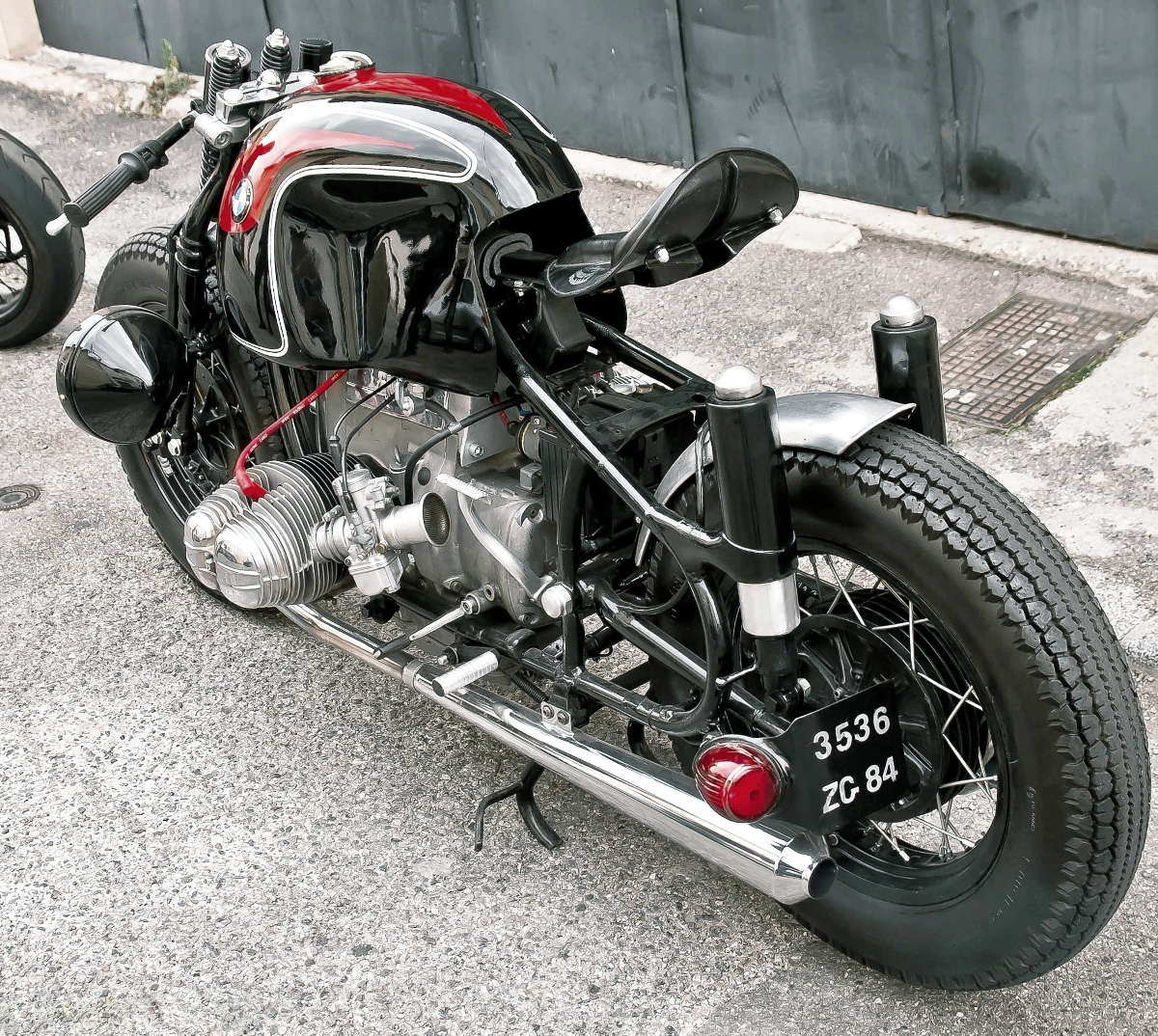
                                         BMW had plenty of practice in building horizontally opposed twins, and it showed. The R90S came from a line of flat twins stretching back to Max Fritz's original R32 of 1923. The German firm had been building competent, comfortable and conservative tourers for many years. But this bike, shaped by noted stylist Hans Muth, had a distinctly more aggressive personality.

                                              The basics were typical BMW. Like the naked R90/6, which was launched at the same time in 1973, the R90S owed much to the previous year's R75. Enlarging the 745cc R75’s bore from 82 to 90mm while retaining the 70.6mm stroke increases capacity to 898cc. BMW also made a few other updates, including a revised gearchange mechanism, more powerful 280W alternator and stronger bottom end.

                                           There was more to the S-bike than just its fairin_ The engine was given a higher compression ratio. 9.5:1 against the 9:1 of the R90/6, and breathed ii through big 38mm Dell'Orto carbs with accelerate pumps. Maximum power was 67bhp at 7000rpm. an increase of 7bhp over the standard model. The R90S also had a steering damper in its cockpit, a larger fuel tank and a second front brake disc.

BMW R90S HD Wallpapers

                                            The extra power gave the S model a worthwh boost at high revs, without hindering either its torquey mid-range response or its smoothness at most engine speeds. Better still, the fairing meant the engine's performance could be fully exploits by the rider, who was free of the wind-blast generated by every rival superbike. Other manufacturers would soon follow BMW’s lead, but for the moment the fairing put the R90S in a class of its own.
BMW R90S HD Photos

Comfortable ride

                                Handling was good, too, despite suspension that was soft enough to give a comfortable ride. Notwithstanding its steering damper the S sometimes felt light at the front when approaching its top speed, but that was even more true of most naked rivals. The twin-disc front brake system was reliable but lacked feel until uprated in 1975. Neat touches included a dashboard clock, generous fuel range of 200 miles (322km) or more, and a seat that allowed the rider to cover that distance in comfort.

BMW R90S Exhaust Sound

                                    BMWs had never been cheap, and the R90S, with its all-inclusive specification, was no exception to this rule. In many markets it was more than twice the price of Honda’s CB750. That ensured the R90S would be ridden only by a select band of riders. Although the bike was a success, it was outsold by the standard 90/5.

BMW R90S Front look

                                      Those riders fortunate enough to cover serious distance on the R90S knew that it was a very special motorcycle. If what you needed was a speed, handling ability and comfort, the R90S delivered in style. Oh, and sometimes it was the quickest superbike round a racetrack, too. BMW ace Reg Pridmore’s victory in the 1976 US Superbike championship was proof of that.

BMW R90S Tail Look

                                      At heart the R90S was a traditional BMW boxer, but its fairing and especially its bold smoked grey or orange paint schemes gave a much more modern and attractive look. The bike's performance was backed by typically practical features including gaitered forks, a generous dual seat and shaft final drive.

BMW R90S Wikipedia

                                Although the R90S chassis was built for comfort as much as speed, the bike ’.v rigid frame and fairly well- controlled suspension gave reliable handling. On long journeys, especially, few contemporary superb: ■ > could match the efi'oriu performance o ’ BMW flagship, which unfortunately had a hefty price tag to match its impressive specification.


                          Specification BMW R90S                                                         (1974)


  • Engine Air-cooled ohv four-valve pushrod flat twin
  • Capacity 898cc (90 x 70.6mm)
  • Maximum power 67bhp @ 7000rpm
  • Transmission Five-speed, shaft final drive
  • Frame Steel twin downtube
  • Suspension Telescopic front; twin shocks rear
  • Brakes Twin discs front; single disc rear
  • Weight 474lb (215kg) wet
  • Top speed 125mph (201 km/h)

Monday, 6 February 2017

BMW K1 (1989) Top speed, Maximum power, Transmission type


                                     BMW K1


BMW K1 Price, Specs, Review, Top speed, Wikipedia, Color

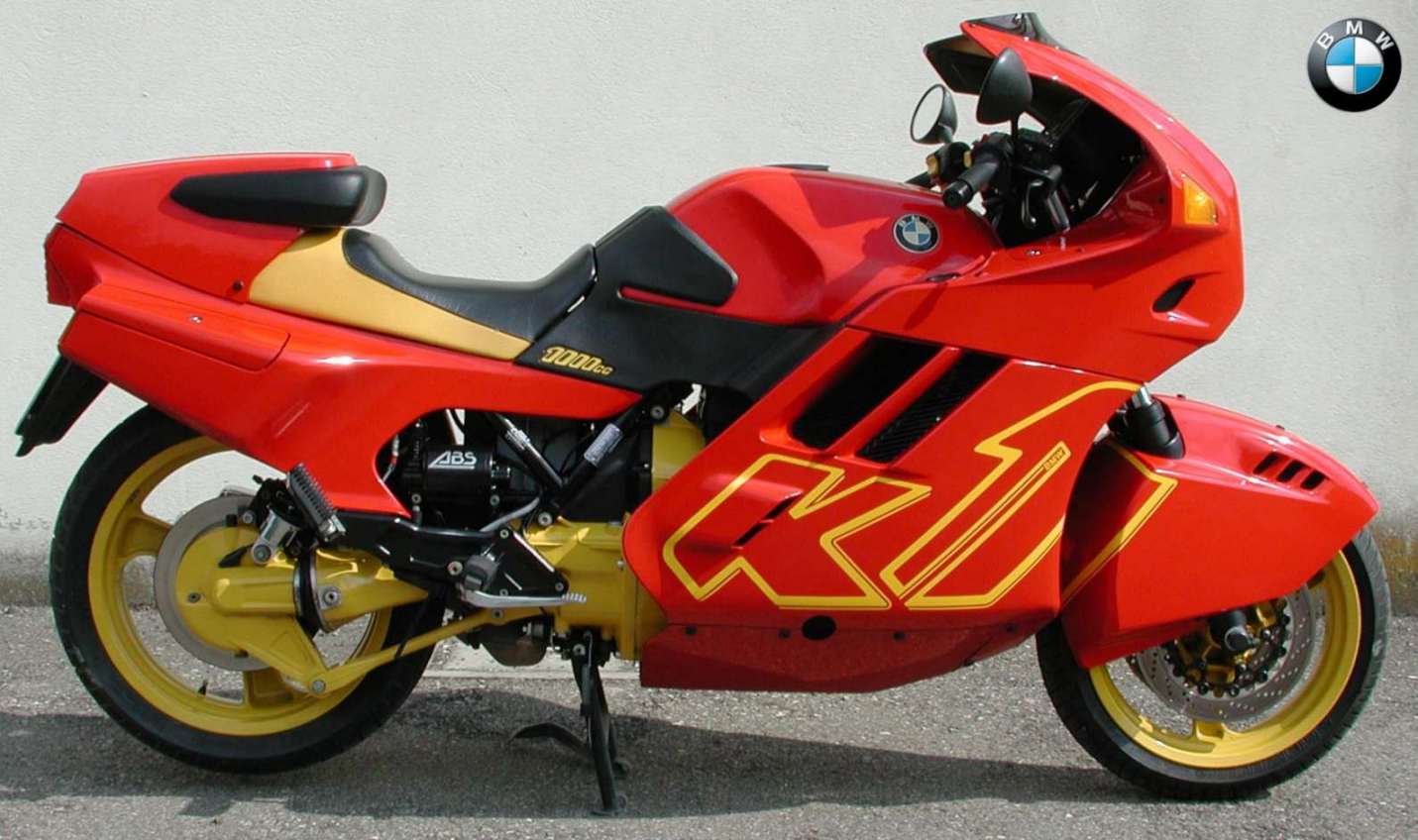
                             For such a long, heavy bike the K1 went round corners well, and it remained stable in a straight line to its top speed of over 1-fOmph (225km/h).

BMW K1 HD Pics

                                     The Kl’s radical look, thanks mainly to its streamlined, all-enveloping bodywork, would have been a big surprise coming from any manufacturer, let alone traditionally conservative BMW.

BMW K1 HD Images

                                Few such striking bikes have ever come from such an unlikely source as the big,

BMW K1 HD Wallpaper

                                       1 bold and colourful K1 with which BMW stunned the motorcycling w'orld in 1989. In recent years the German firm has introduced many innovative and eye-catching machines. But until the K1 appeared, the BMW’s name was synonymous with efficient but unexciting tourers.

BMW K1HD Photos

                                 The K1 had been given its big. aerodynamic coat for two main reasons: firstly as a radical two­wheeled statement, and secondly because BMW had decided to restrict its power output to lOObhp. the voluntary German limit, so the bike needed all the help it could get to boost performance. The big front mudguard, all-covering fairing, swoopy seat and built-in panniers helped the K1 to a top speed of 145mph (233km/h), faster than most bikes managed from lOObhp.

BMW K1 Ex-showroom price in india

                                          Those 100 horses were produced by a 16-valve version of the liquid-cooled 987cc four-cylinder motor from the K100RS sports-tourer. Unlike Japanese fours, the German firm’s K-series engines had cylinders lying horizontally and arranged along the line of the bike. The K1 motor gained lObhp through its more sophisticated fuel-injection system, new- exhaust and a few other tuning tricks.

BMW K1 On road price in india

                                    Beneath the bold bodywork, the Kl’s chassis was conservative. It was based around a steel space-frame that used the powerplant as a stressed member. Suspension was a combination of BMW K1

                                           Marzocchi front forks and BMW’s well-proven arrangement of a single rear shock acting on the swingarm/shaft-drive housing. Brakes were from Brembo; cast wheels carried wide, low-profile radial rubber.

BMW K1 Exhaust sound

High speed cruising

                                            Despite being BMW’s most powerful ever roadster, the K1 was in a modest state of tune. Its engine was docile at low speeds, pulling cleanly from tickover right to the 85()()rpm redline with no real step in its power delivery. The bike cruised effortlessly at high speed, with a burst of acceleration in hand when required. But acceleration was good rather than exceptional, due partly to the bike’s 5701b (259kg) of weight, and the motor vibrated noticeably above 5000rpm.

BMW K1 Front look

                                 Handling showed much the same characteristics: it was not racer-sharp but fairly laid-back, requiring a reasonable amount of effort at the handlebars. One advantage of that was that the Kl remained reassuringly stable all the way to its top speed, swallowing high-speed curves without a twitch. The forks were excellent, and although the rear suspension was a little harsh the Kl tracked well over bumps.


Blown BMW: the Luftmeister K1


                                  The ultimate fast BMW was a turbocharged K1 special from Luftmeister, the California-based tuning company. Fitting an IHI turbocharger beneath the K1's bulky bodywork doubled peak output to approximately 160bhp at the rear wheel, with minimal engine strengthening work required. The BMW's shaft final drive made altering its gearing difficult, but with a suitably tall ratio the Luftmeister K1 was good for over 185mph (298km/h).

BMW K1 Tail look

                                         It was when there were serious distances to be covered that the Kl came into its own. Its big fairing not only boosted performance but diverted wind from e%er\where but the rider's helmet, allowing high cruising speeds. Fuel economy and the broad seat added to the comfort. Annoy ingly for such a good long- e, the b ke’s wind-smoothing rear p cketv mmeh r enough to carry a toothbrush inniers impossible to fit. The K1 was a success for all that.

BMW K1 Wikipedia

                                   It was a fine sports-tourer. And more importantly, it was a unique anc striking machine that began BMW’s move from one of the most conservative of bike manufacturers to one of the most bold and imaginative.

BMW K1 Specification

                               The ultimate fast BMW was a turbocharged K1 special from Luftmeister, the California-based tuning company. Fitting an IHI turbocharger beneath the K1's bulky bodywork doubled peak output to approximately 160bhp at the rear wheel, with minimal engine strengthening work required. The BMW's shaft final drive made altering its gearing difficult, but with a suitably tall ratio the Luftmeister K1 was good for over 185mph (298km/h).


Wednesday, 1 February 2017

BMW K1200RS (1997) Top speed, Maximum power, Transmission type


                                              BMW K1200RS


BMW K1200RS Price, Specs, Review, Topspeed, Color, Wikipedia

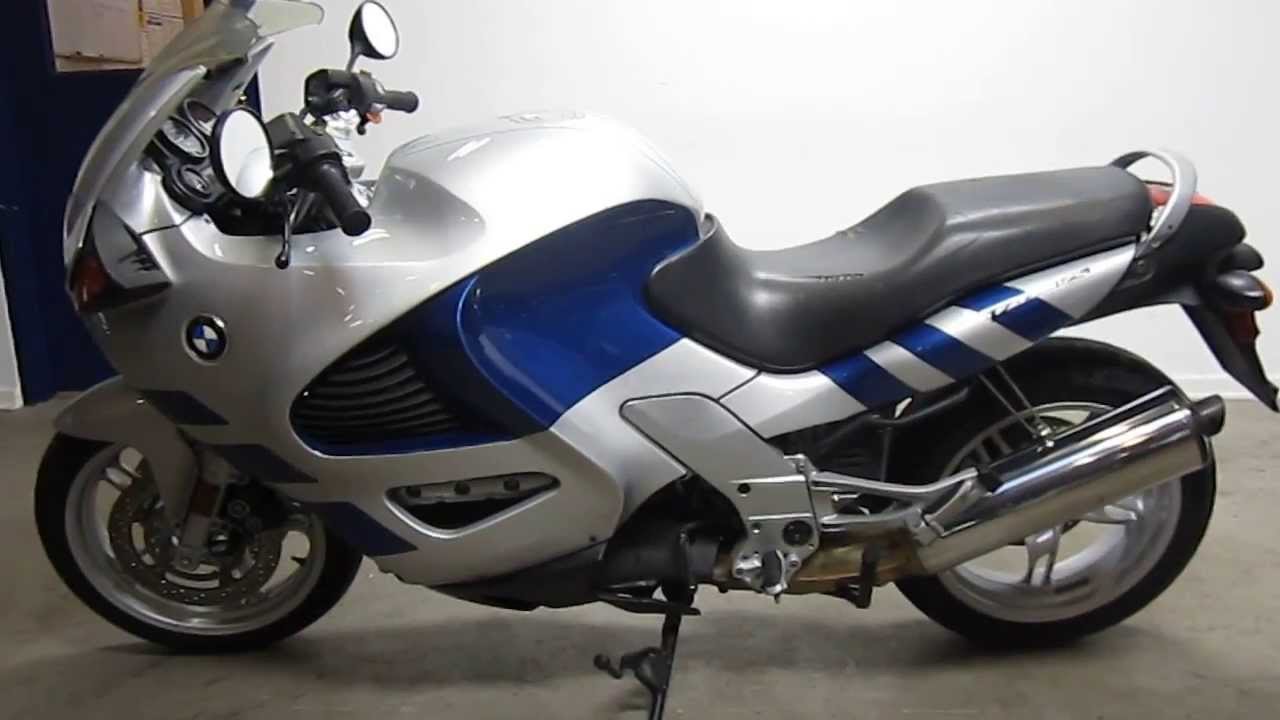
                          The RS’s bodywork hid not only the 1171 cc inline four-cylinder engine but also most of the frame, which broke with BMW tradition both by being made from aluminium, and because it did not employ the engine as a stressed member. This allowed the motor to be rubber- mounted, which combined with the adjustable ergonomics to give a comfortable ride.

BMW K1200RS Specification

                            BMW had already gone a long way towards shedding its reputation for building competent but rather dull bikes when the K1200RS was launched in 1997. but even so the big four-cylinder sports-tourer was a revelation. With its swoopy styling, aluminium frame. Telelever front suspension system and potent liquid-cooled, four-cylinder powerplant. the RS was every bit a modern superbike. And with a claimed 130bhp on tap. it blew wide open the self-imposed lOObhp limit that had handicapped the German marque for years.

BMW K1200RS HD Pics

                              The K1200RS was still very much a BMW. for all that. Unlike the majority of sports-tourers, it placed as much emphasis on the touring side of the equation as the sports. Typical BMW touches included handlebars, seat and footrests that could all be adjusted. The screen could also be set in one of two positions, which further added to the rider's comfort at speed.

BMW K1200RS HD Images


BMW K1200RS HD Wallpaper

                          But it was for the stunning performance of its engine, a revamped version of the longitudinally mounted 16-valve four from the Kl 100RS, that the RS was most memorable. Capacity was increased from 1092 to 1171 cc by use of a new, longer stroke crankshaft. Lightweight pistons and valvegear, higher compression ratio and a ram-air intake system all contributed to its peak output of I30bhp at 8750rpm.

BMW K1200RS Ex-showroom price

                         That made the Kl2 by far BMW's most powerful bike ever, and the German firm's engineers had managed to combine its new-found high-rev power with the K-series motors' traditionally strong mid-range torque. The revised Motronic injection system provided instant, snatch- free response from below 3000rpm even in top gear, from which point the RS just kept pulling harder until its power started to drop off towards the 9000rpm redline. Such was the motor’s mid-range punch that there was little reason to rev it above SOOOrpm. but it was tempting to do so just because the newly rubber-mounted powerplant felt so smooth at almost all speeds. A slight tingle intruded at 4500rpm, ironically a useful 85mph (137km/h) cruising speed in top gear. But the traditional K-series buzz was gone, and the RS felt very refined. It was fast, too: good for a genuine 150mph (241 km/h) without luggage. And its new six-speed gearbox was not just the best ever fitted to a BMW, but the first to match Japanese standards.

BMW K1200RS Ex-showroom price

                              The K12's chassis was also impressive. The frame w'as an aluminium spine design, much more substantial than previous steel structures because the rubber-mounted K12 motor was not a stressed member of the chassis. Weighing 5731b (260kg) dry, and with a long wheelbase, the K1200RS was a big and heavy bike, but was well-suited to maintaining a fast pace on curving main roads. Its steering was quite slow but neutral and precise, and high-speed stability was good even w'hen loaded with luggage.

BMW K1200RS Exhaust sound

                                   Front suspension w as by a revised, frame-mounted version of the Telelever system fitted to the R1100RS flat tw in, and worked well. Twin-piston Brembo front calipers and large floating discs combined with an ABS system to give powerful and reliable braking. The "ingle-sided Paralever rear swingarm pivoted on the frame and worked a single shock, placed diagonally on the right of the bike. The RS w as too soft and heavy tobe much fun in tight turns, but it could corner respectably rapidly when requested.

BMW K1200RS Specification

                         Ironically, arguably the RS’s only real weakness, apart perhaps from a high price and its sheer size and weight, was the mediocre fuel range provided by its combination of high-speed thirst and too-small tank. That untypical BMW fault did little to lessen the appeal of a very fast and refined long-distance machine.

BMW K1200RS Front look

                         BMW’s Telelever front suspension system looked like conventional front forks at first glance, but featured a single shock unit in the fairing nose.

BMW K1200RS tAIL LOOK

                       The KI200RS was very fast but too heavy for aggressive riding, and was at its best when laden with tank bag and panniers.

BMW K1200RS tOP SPEED

                          The two-way adjustable screen was less efficient than fully adjustable predecessors, but better than most rivals. BMW's quirky switchgear took some getting used.


                 Specification BMW K1200RS                                                  (1997)


  • Engine Liquid-cooled dohc 16-valve inline four
  • Capacity 1171cc (70.5 x 75mm)
  • Maximum power 130bhp @ 8750rpm
  • Transmission Six-speed, shaft final drive
  • Frame Aluminium twin spar
  • Suspension Telelever monoshock front; monosh: :•
  • Brakes Twin discs front; disc rear
  • Weight 573lb (260kg)
  • Top speed 150mph (241 km/h)

BMW R1100S (1998) HD Wallpapers, Price, Brakes


                                 BMW R1100S


BMW R1100S Price, Specs, Review, Top speed, Color


                  High-compression pistons and improved breathing helped make the I085cc engine BMW's most powerful boxer motor ever. Cylinder head covers were magnesium to save weight.

BMW R1100S HD Pics

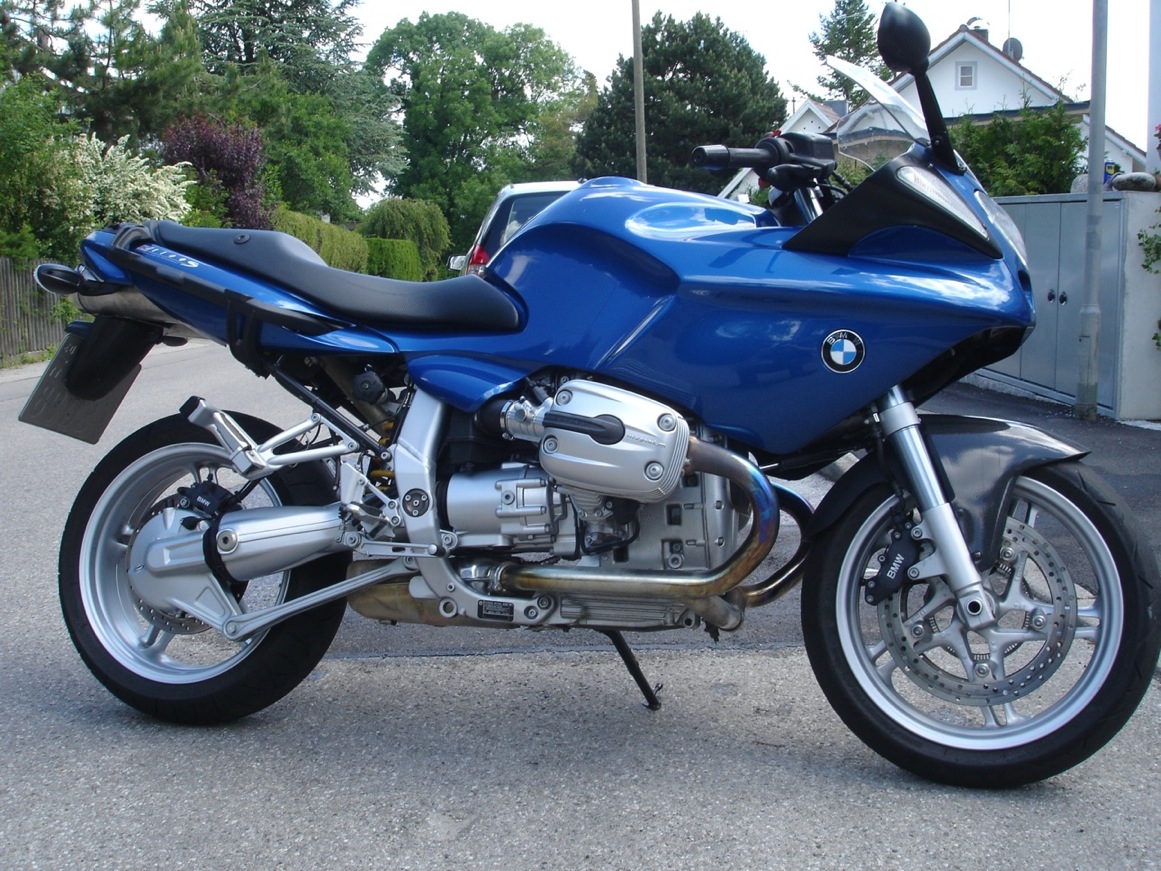
                Swoopy styling, low handlebars, bright yellow paintwork, a high-level exhaust system with under­seat silencers, and a single- sided swingarm all combined to give the R1100S a truly sporty look.

BMW R1100S HD Pics

                       The stylish and rapid Rl 100S arrived in 1998 to prove that BMW's traditional flat- twin format was still very viable for high- performance motorcycling. This was the most aggressive roadgoing boxer that BMW had ever built. The German firm referred to it as a ‘sports- tourer with the emphasis on sport*, and the l lOOS was quick, agile and well-braked enough to hold its own in serious company.

BMW R1100S HD Wallpaper

                    With its two sticking-out cylinder heads, there was no mistaking that this bike was a BMW. But the S had a very distinct style of its own. notably at the front end with its big ellipsoidal headlamp lens. The asymmetrical theme was echoed in the fuel cap and instruments; further back, the rear end was notably lean and sporty.

BMW R1100S Specification

                       The new bike’s I085cc air-cooled engine, based on the eight-valve, high-cam unit from the touring- oriented Rl 100RS. made this BMW's most powerful flat twin yet. It was tuned with new pistons that gave increased compression ratio.

BMW R1100S Ex-showroom price

                 Breathing was also improved by a new air filter design, plus a revised Motronic engine- management system.

BMW R1100S On road price

                   A new exhaust system, complete with twin silencers in the tailpiece, also helped increase peak output by 8bhp to 98bhp at 7500rpm. Forged conrods helped keep the engine together at its higher 8500rpm rev limit, and crankcase oil circulation was improved. Although it retained shaft final drive, the 1100S also had a new six- speed gearbox.

BMW R1100S Front look

                        Much of BMW’s effort in the Rl lOOS's chassis design went in ensuring that this was not just the best-handling boxer yet, but also reasonably light. At 461 lb (209kg) dry it was still heavier than its closest rivals - but not by much. Some of the weight-saving came from a new and lighter \er4on of BMW’s Telelever monoshock front suspension system, which featured a remote rebound damping adjustment knob in the steering head area.

BMW R1100S Tail look

Aluminium main frame

                     As with other four-valve boxers, the engine and gearbox housing were also stressed members of the chassis, but the 1100S differed in having an aluminium main frame. A tubular steel rear subframe supported the Paralever rear suspension system, which gave a clean and racy look from the left. Wheels were new. lighter l"-inchers wearing sticky radial rubber.

BMW R1100S Top speed

                       The mildly tuned boxer engine pulled well from low down, and revved w ith more enthusiasm than previous boxers. The S was ver> happy to sit at an indicated 85mph (137kmhi. just under 5000rpm in top gear, feeling smooth, stable and unstressed. Above that figure the engine felt a bit harsh, but the BMW had plenty of acceleration in hand to a top speed of 140mph (225km/h).

                     It was the new bike's chassis that made the biggest impression, because this Rl 100S handled like no other BMW roadster. Its chassis geometry was close to the race-replica norm, and the bike impressed with the ease and precision with which it went round corners given a light flick of the sportily low-set handlebars.

BMW R1100S Stunt pics

                       The Telelever front end gave a great combination of quick steering and stability. particularly when braking hard into a turn. Suspension at both ends delivered plenty of feedback, and was well-damped enough that the bike remained composed even when accelerating hard out of bumpy bends. The front-brake combination of four-piston Brembo calipers and 305mm discs was excellent, too.

                       The R1100S was a bike that stood out not for traditional BMW attributes such as long-distance comfort or refinement, but for light steering, powerful brakes and a liking for speed. It was an enjoyably fast, fine-handling machine that put BMW firmly in the sports bike market for the first time since the R90S of the mid-1970s.

BMW R1100S all color pics

                     Handling was excellent, with a light and neutral steering feel, reasonably firm and well-damped suspension, and Not everyone liked the asymmetrical headlight design, but this was one BMW that nobody could accuse of looking ordinal


                      Specification BMW R1100S                                                      (1998)

  • Engine Air-cooled high cam eight-valve flat twin
  • Capacity 1085cc (99 x 70.5mm)
  • Maximum power 98bhp @ 7500rpm
  • Transmission Six-speed, shaft final drive
  • Frame Cast aluminium and tubular steel
  • Suspension Telelever monoshock front; monoshock ^ea'
  • Brakes Twin discs front; single disc rear
  • Weight 4611b (209kg)
  • Top speed 140mph (225km/h)